SUWA PILGRIMAGE
Pilgrimage to Suwa · Sanae's Homeland
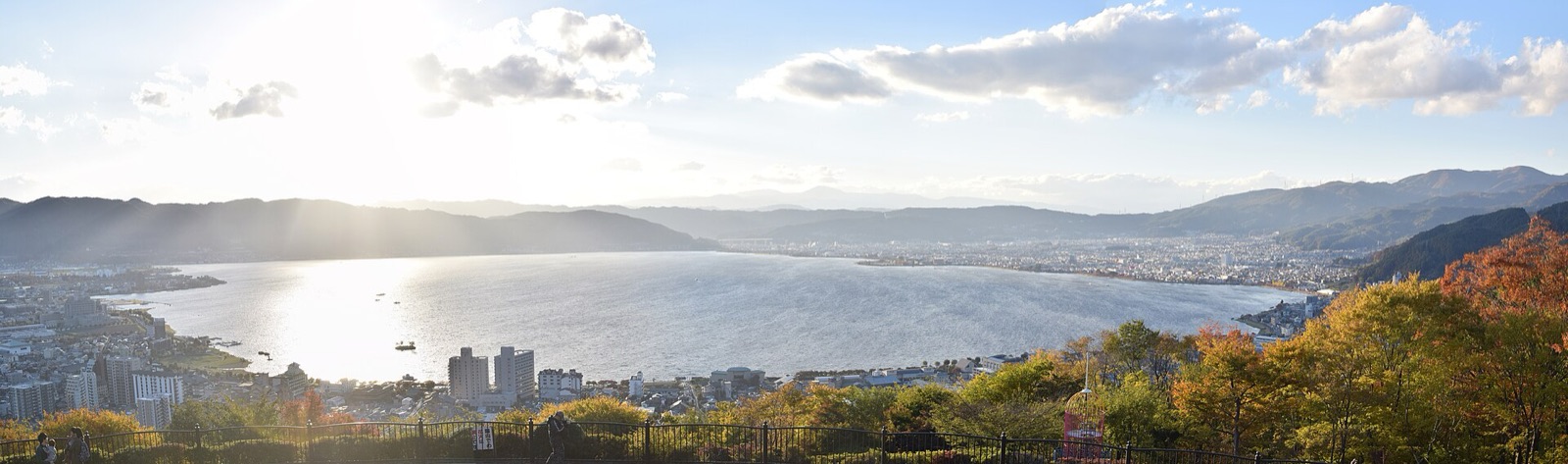
Two hours from Shinjuku on the limited express Azusa, a quiet lake appears on the right side of the train window. This is Suwa, Nagano — the "outside world" home of Sanae Kochiya. Her surname, her goddesses Kanako and Suwako, her very identity as a living god: all of it grew between this lake and these mountains. This page walks Suwa again, along Sanae's line of sight — shrines, myth, the Onbashira festival, and what to eat when you get there.
Two wars, one lake
Suwa's story begins with two lost wars. The first is recorded in the Kojiki: Takeminakata, son of Ōkuninushi, refused the ceding of the land to the heavens, wrestled the war god Takemikazuchi, lost, and fled to the shore of Lake Suwa — allowed to stay only on a vow never to leave. The second version is the one Suwa locals tell: the invader Takeminakata (Suwa Daimyōjin) defeated the indigenous mountain god Moreya, who yielded rule of the land. Suwako Moriya's spell card "Suwa Great War" is this second war, exactly. The defeated never disappear here: the winner's line (the Ōhōri, living gods) and the loser's line (the Moriya, priests of the deepest rites) served the same shrine for over a thousand years — the blueprint for Kanako and Suwako's uneasy cohabitation in Gensokyo.
Local legend says the two gods fought with vines against kaji (paper-mulberry) wood — which is why the crest of Suwa Taisha is still a kaji leaf.
The living-god lineage
A 15th-century Suwa text tells of an eight-year-old boy named Arihira who led the deity's spirit-troops to subdue "Moriya" — and then became the deity's living vessel: a ara-hitogami, the first Ōhōri of Suwa's upper shrine. Until the Meiji era, the official goshintai (sacred object) of the upper shrine was not a mountain, a tree or a mirror — it was the living Ōhōri himself. Sanae's setup — a human worshipped as a god — is not an exaggeration; it is the thousand-year orthodoxy of Suwa, with the Moriya family as the priests who made the god manifest.
A thousand years of the Moriya
The Moriya held the office of Jinchōkan — keepers of the Mishaguji rites, the most secret layer of Suwa worship — from antiquity until Meiji. In the Sengoku era, Jinchō Moriya Yorizuma mediated the peace between Takeda Nobutora and Suwa Yorimitsu, ringing the shrine's ancient iron bell as the pledge; the family later served under Takeda Shingen. When Meiji dissolved the old priesthood, the orally transmitted secret rites ended — Sanae's "secret art passed down to a single heir" is this family history, rewritten into fantasy.
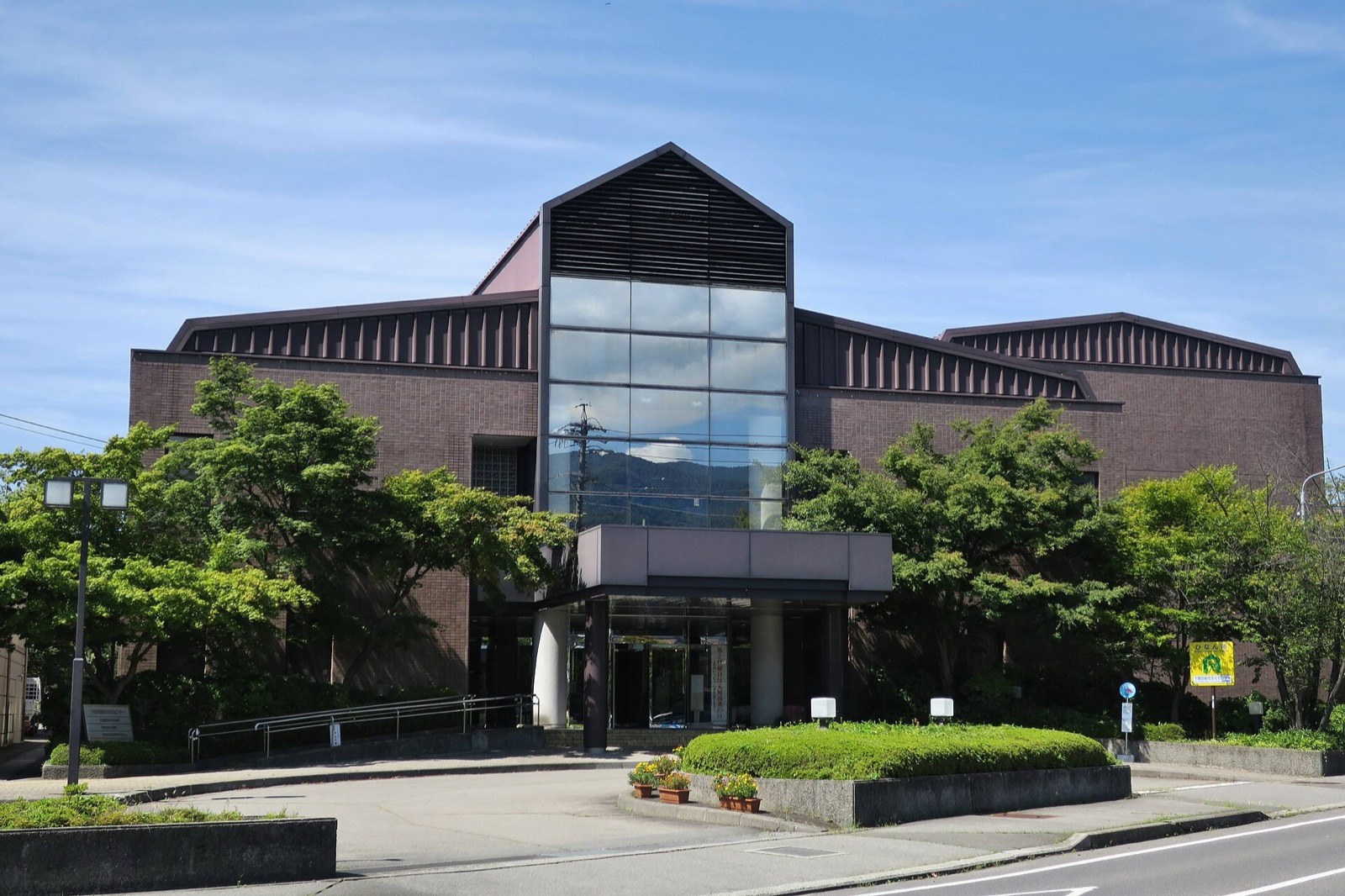
The family is still real: the 78th head, Sanae Moriya — yes, our Sanae's namesake — was an elementary-school principal in Tokyo who spent her retirement lecturing on the environment. The Jinchōkan Moriya Archives (Chino City, Miyagawa 389-1, next to the Maemiya shrine; closed Mondays, ~¥200) keeps the Moriya documents — for a Sanae fan, effectively the family records office.
Four shrines, four goshintai
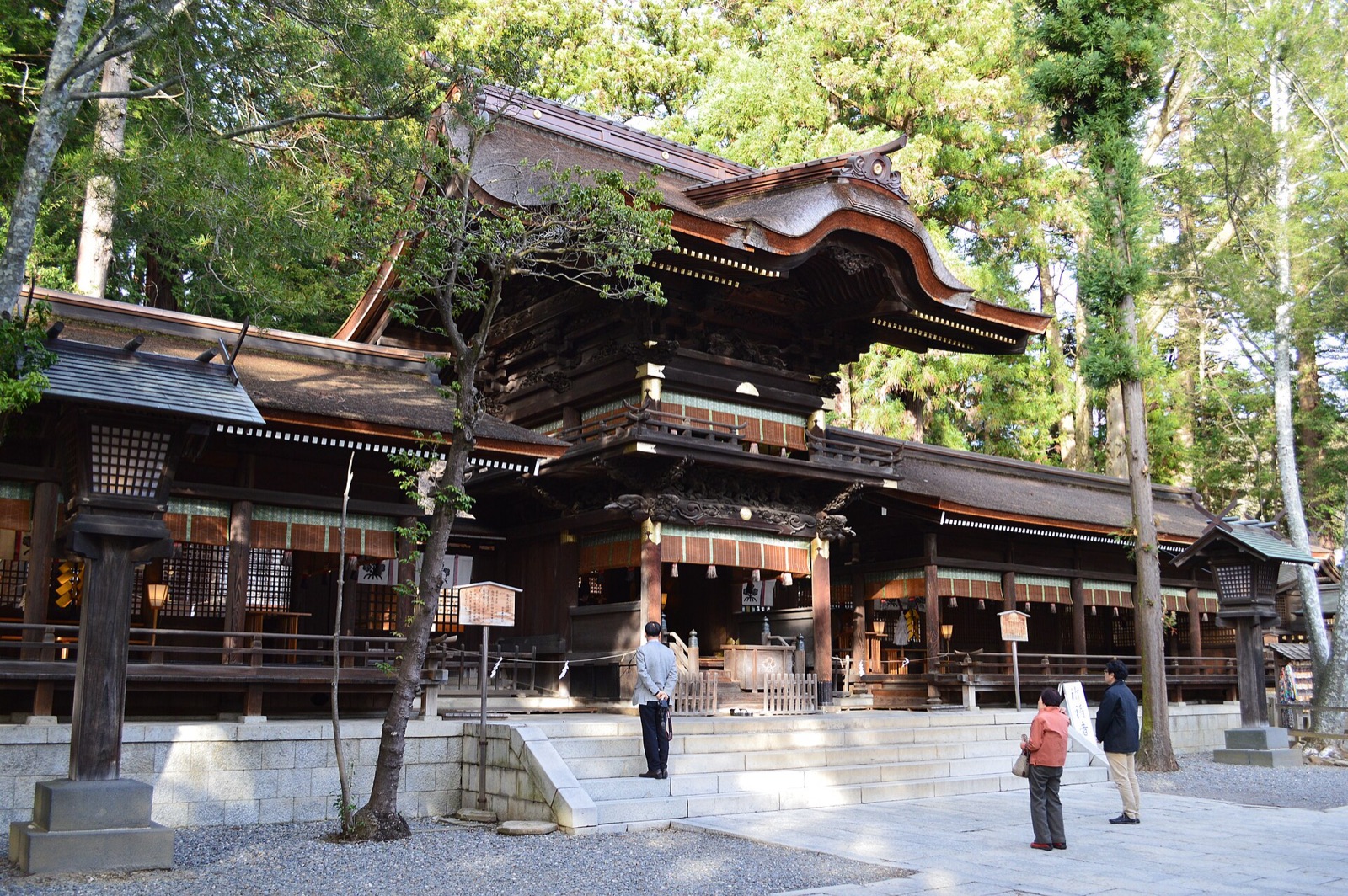
Kamisha Honmiya
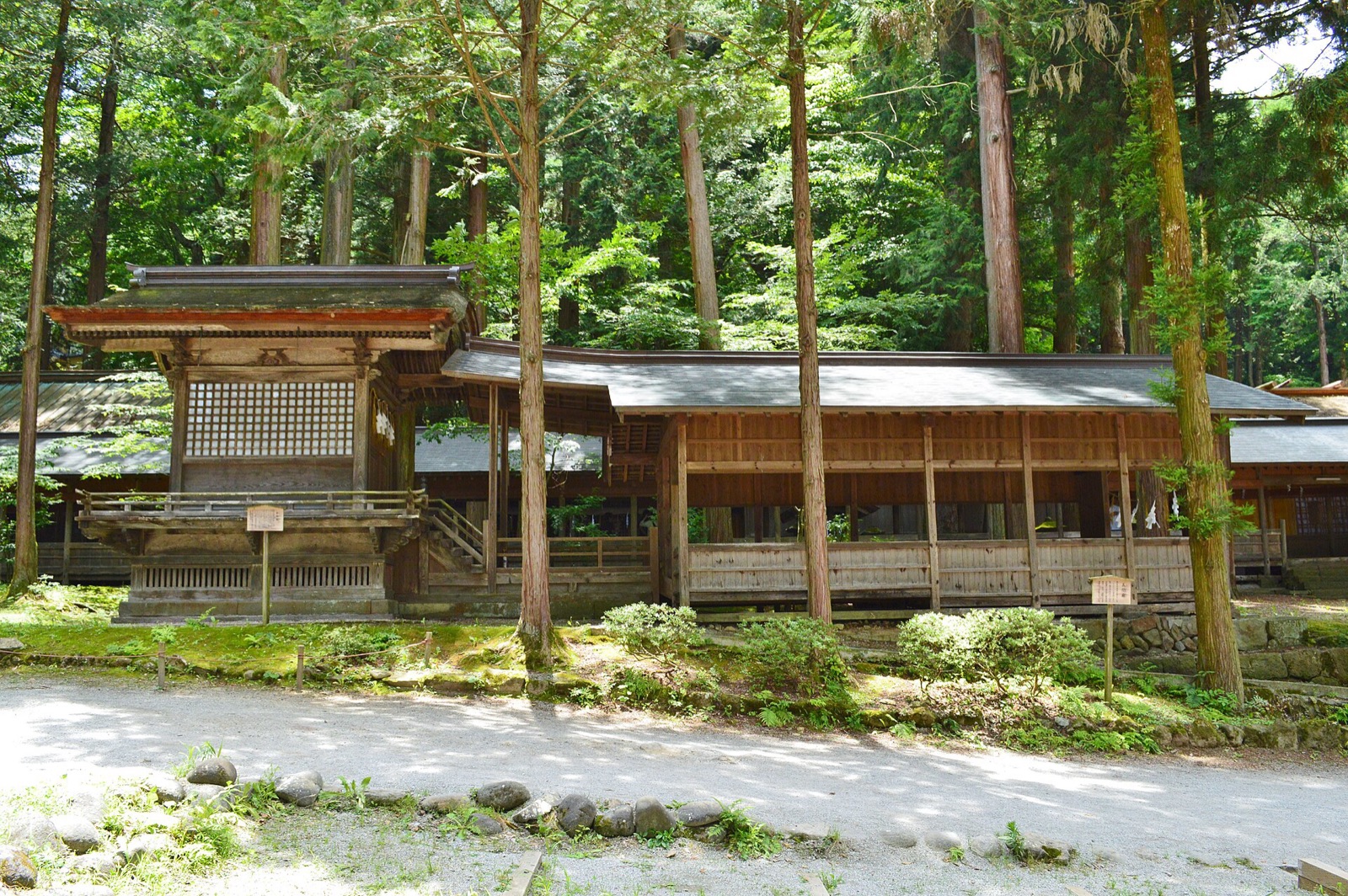
Goshintai: Mount Moriya across the lake. Two thatched treasure halls (east/west) are rebuilt alternately every festival cycle; however dry the sky, at least three drops of water fall daily from their roofs — the "divine drip," one of Suwa's seven wonders.
Kamisha Maemiya
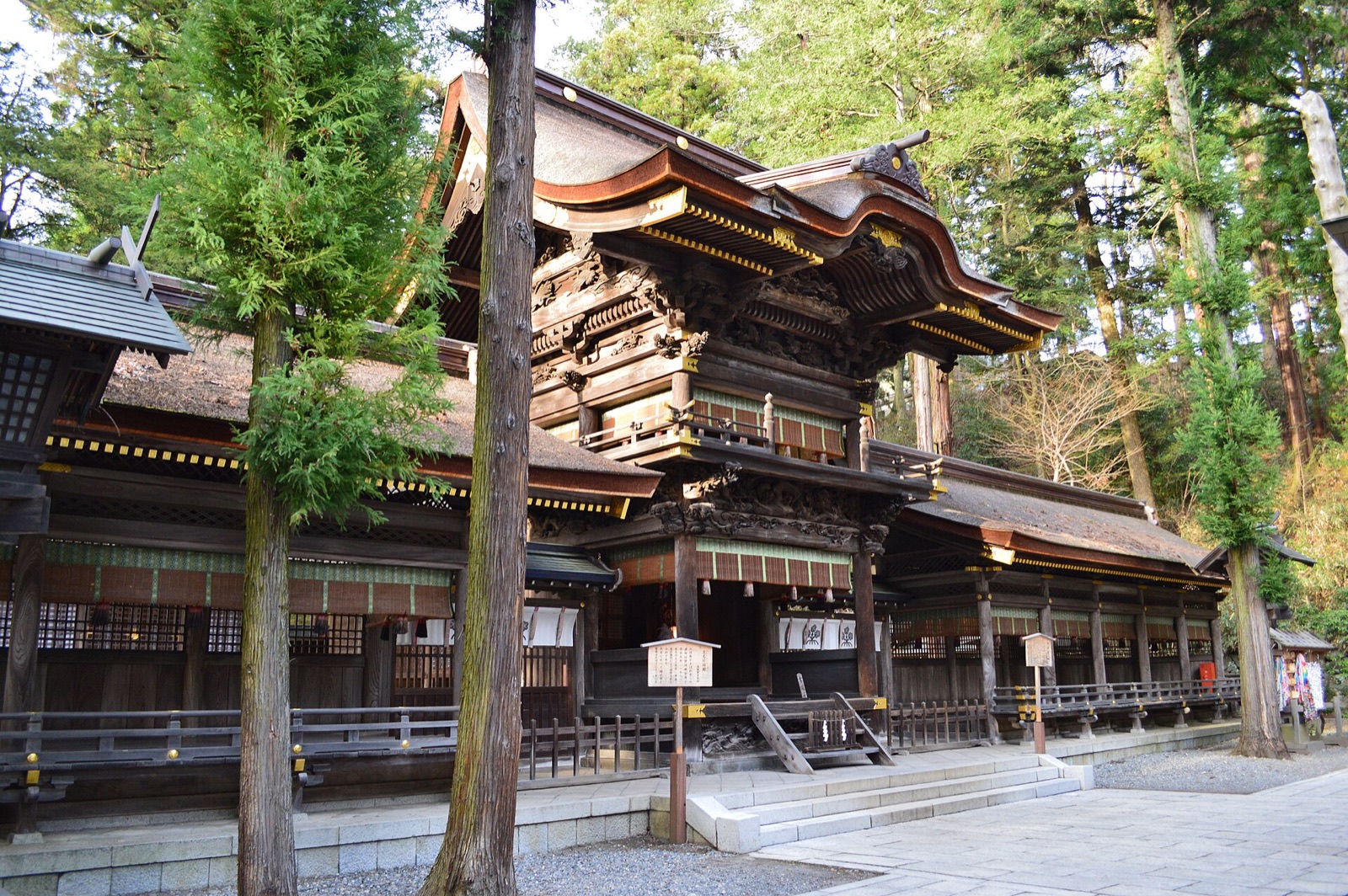
The birthplace of Suwa Taisha and the only one of the four with a main hall. The Mizume clear stream pours down from a kilometer into the mountains. Its deity is Yasakatome — Takeminakata's consort, often read as the other half of Kanako Yasaka's prototype.
Shimosha Harumiya
Goshintai: a cedar tree. The musubi-no-sugi (bonding cedar) splits into two trunks ten meters up yet shares one root. The lower shrines add Yaekotoshironushi to their enshrined gods.
Shimosha Akimiya
Goshintai: an ichii (yew) tree. Home of the rare hot-spring temizuya "O-yu" — purify your hands with actual Shimosuwa onsen water, flowing from a dragon's mouth.
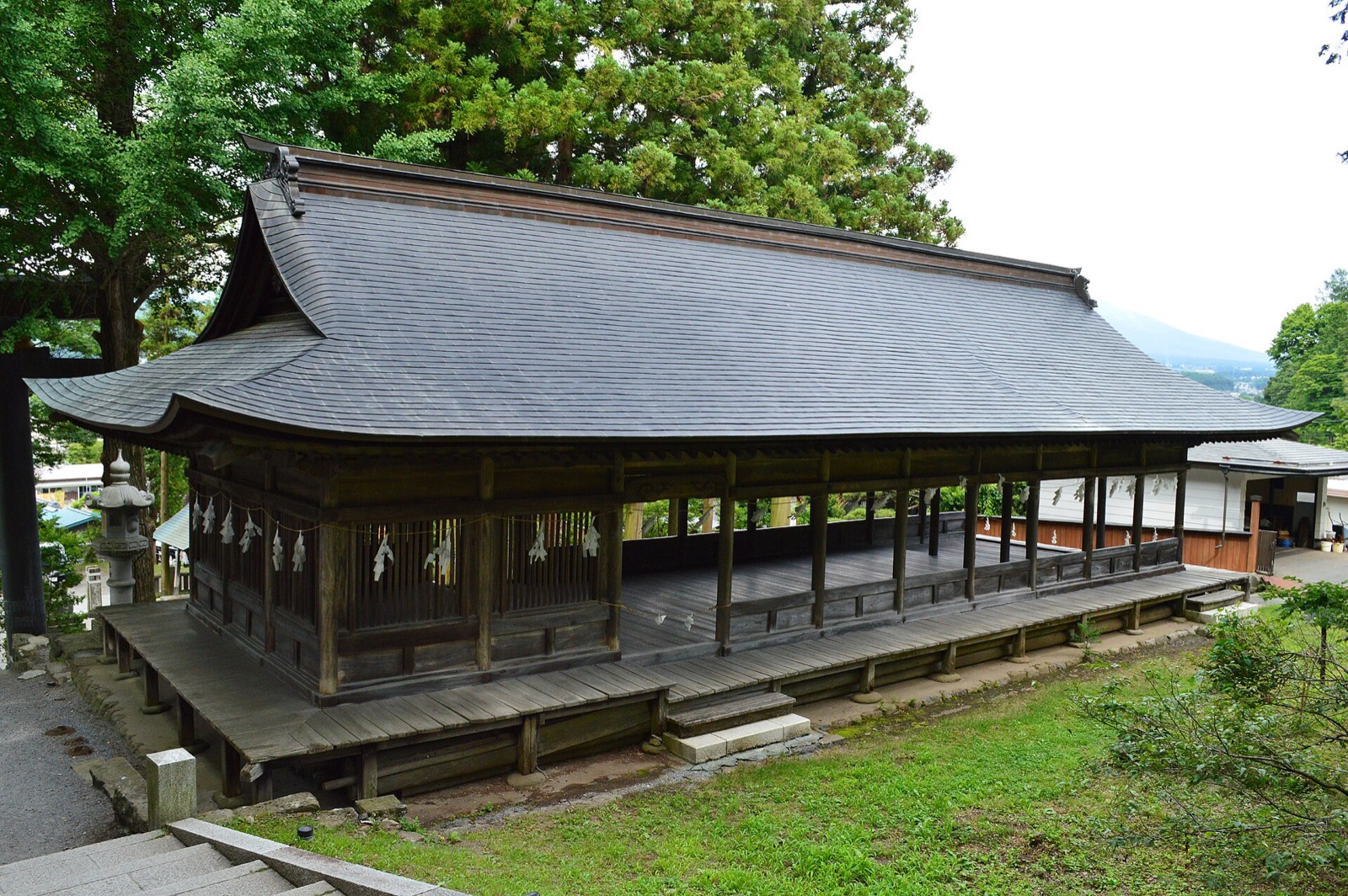
There is no fixed order for the four-shrine circuit; each issues its own goshuin (seal-stamp). The treasure halls (¥500 adults) hold the Nara-era mirror and the Heian "Megaumi-hōri-in" seal — the word hōri in it refers to the Ōhōri, the living god.
Onbashira: faith made timber
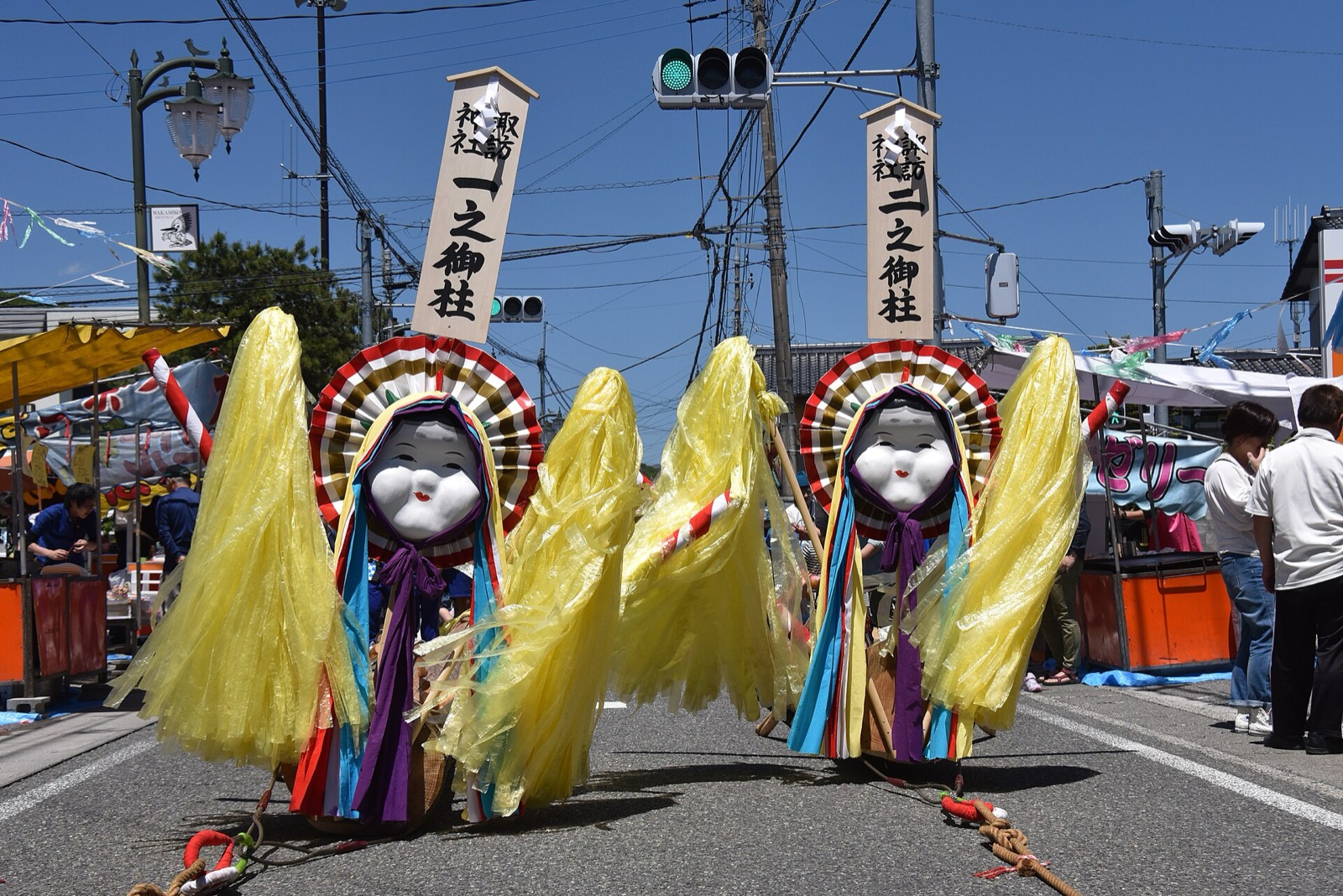
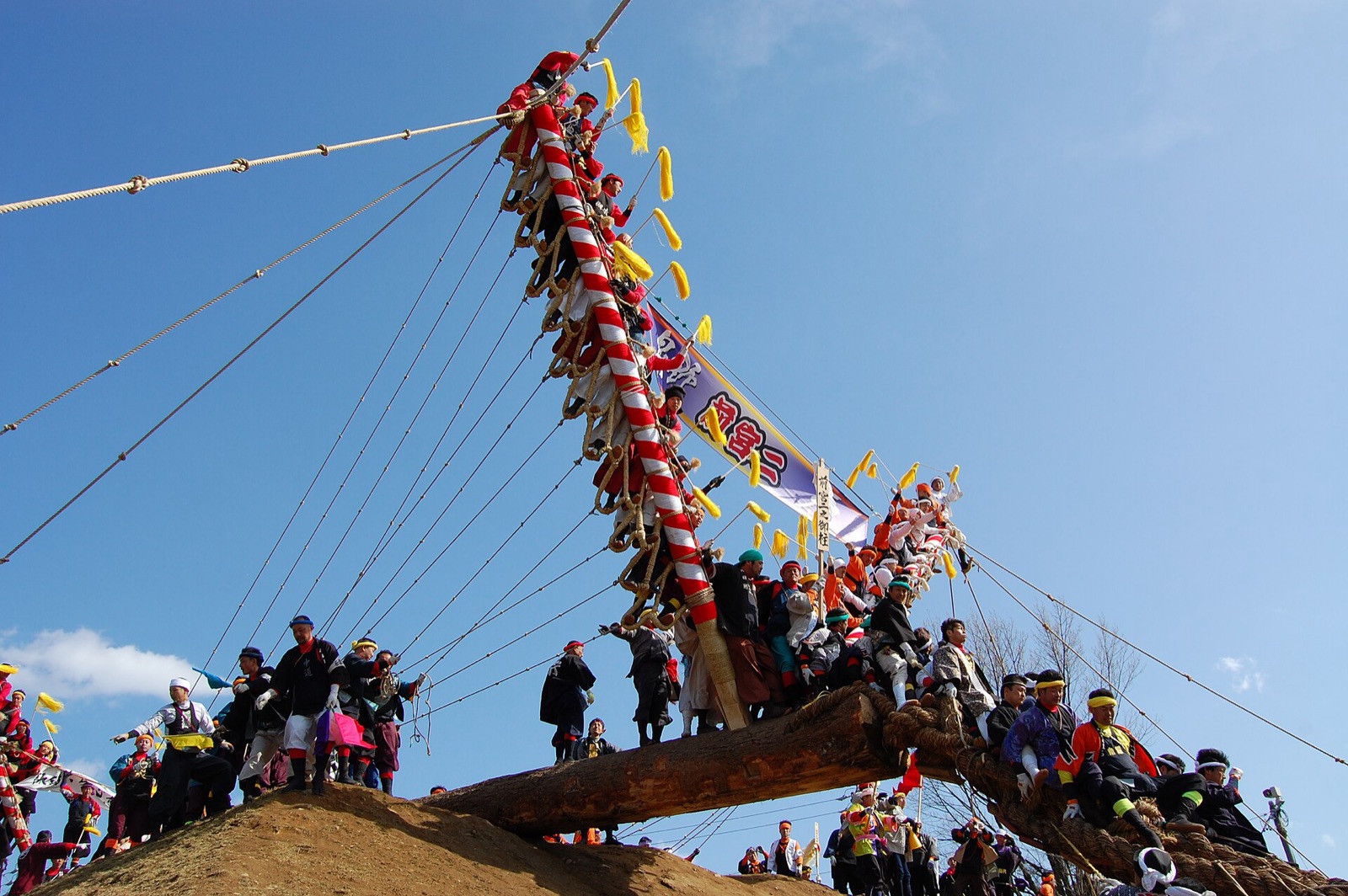
In the years of the Tiger and the Monkey (a seven-year cycle), the Suwa region halts for the Onbashira festival: giant century-old fir trees are cut in the mountains, hauled by human muscle over ridges, streets and rivers, and raised at the four corners of each shrine — the oldest form of the sacred boundary. The yamadashi (April) includes the famous ki-otoshi, riders sliding downhill astride the logs; the satobiki (May) drags them through town; the treasure-hall relocation completes the cycle in June. Over 1,200 years old, broadcast live on local TV, it is Suwa's own festival of faith — and the next one falls in 2028. Start saving days off now.
Moreya Shrine: Suwako's own
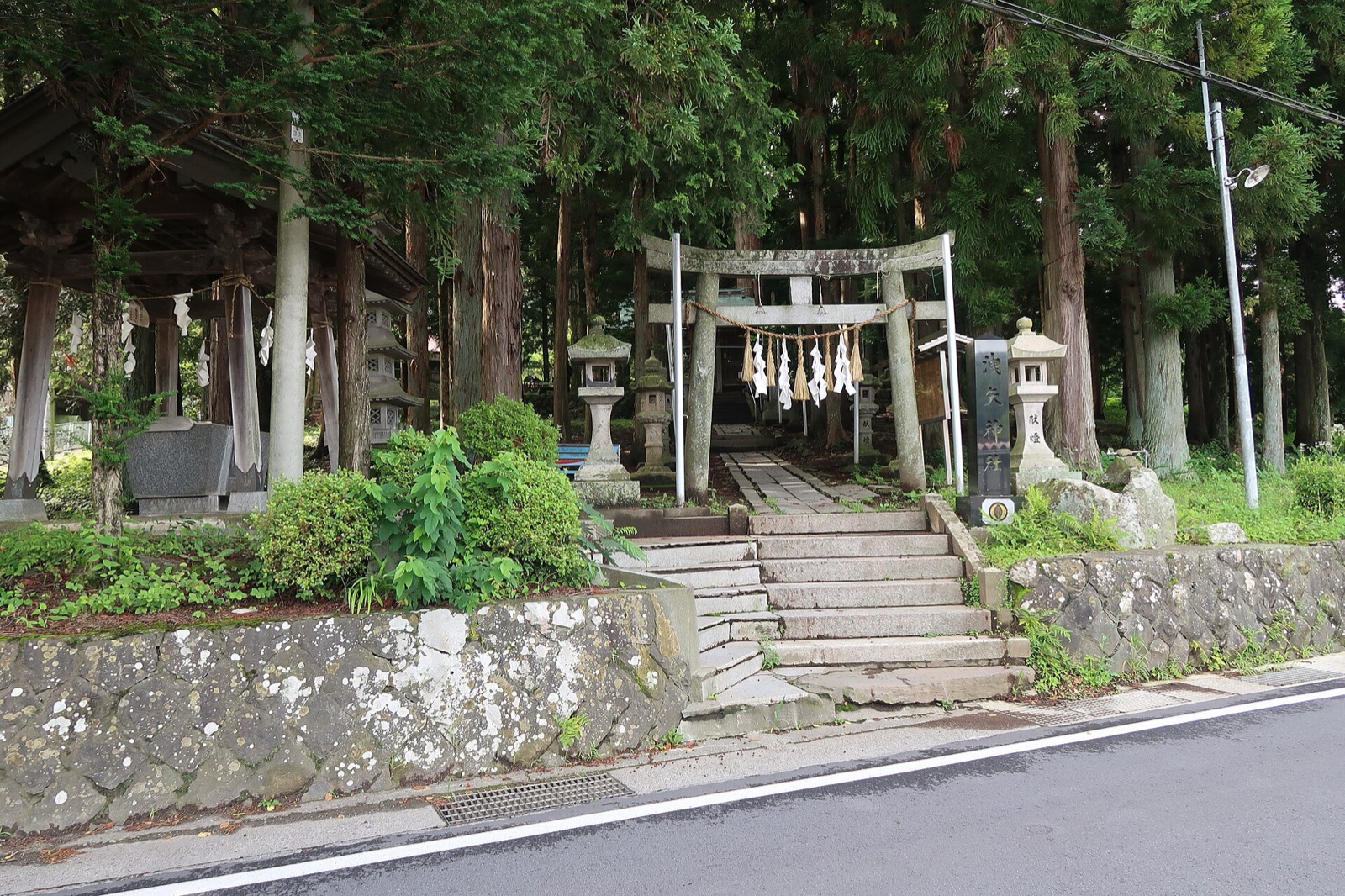
Not formally part of Suwa Taisha, but weightier for Tōhō fans: Moreya Shrine in Okaya enshrines the defeated indigenous god himself. The stone marker "Moriya-no-Ōkami Gokyūseki" nearby — inscribed by the 75th Jinchōkan, Moriya Saneari (1825–1903) — marks the god's original seat. The shrine became Suwako's pilgrimage site, and in 2017 the wave of visiting fans made the Asahi Shimbun: gods losing faith, shrines regaining it in a new form — a very Gensokyo loop.
Practical pilgrimage
| Item | Notes |
|---|---|
| Gateway stations | JR Chūō Line: Chino (upper shrines), Shimosuwa (lower shrines), Okaya (Moreya Shrine). ~2h10 from Shinjuku on the Azusa/Kaiji limited expresses |
| Four-shrine circuit | No fixed order; 3–4 h by car, half a day. Some local buses do not run on Sundays/holidays |
| Goshuin | Each shrine has its own; expect queues in peak seasons |
| Treasure halls | Upper 9:00–16:00 / Lower 9:30–15:00, ¥500 (joint ticket ¥800) |
| Moriya Archives | Chino City Miyagawa 389-1, closed Mondays, ~¥200, a short walk from Maemiya — top side-quest for Sanae fans |
| Next Onbashira | 2028 (Year of the Monkey): April yamadashi → May satobiki → June treasure-hall rites; book lodging 6+ months ahead |
| Onsen | Kamisuwa (station-side baths) and Shimosuwa (temple-inn mood); Akimiya's O-yu is a free taste |
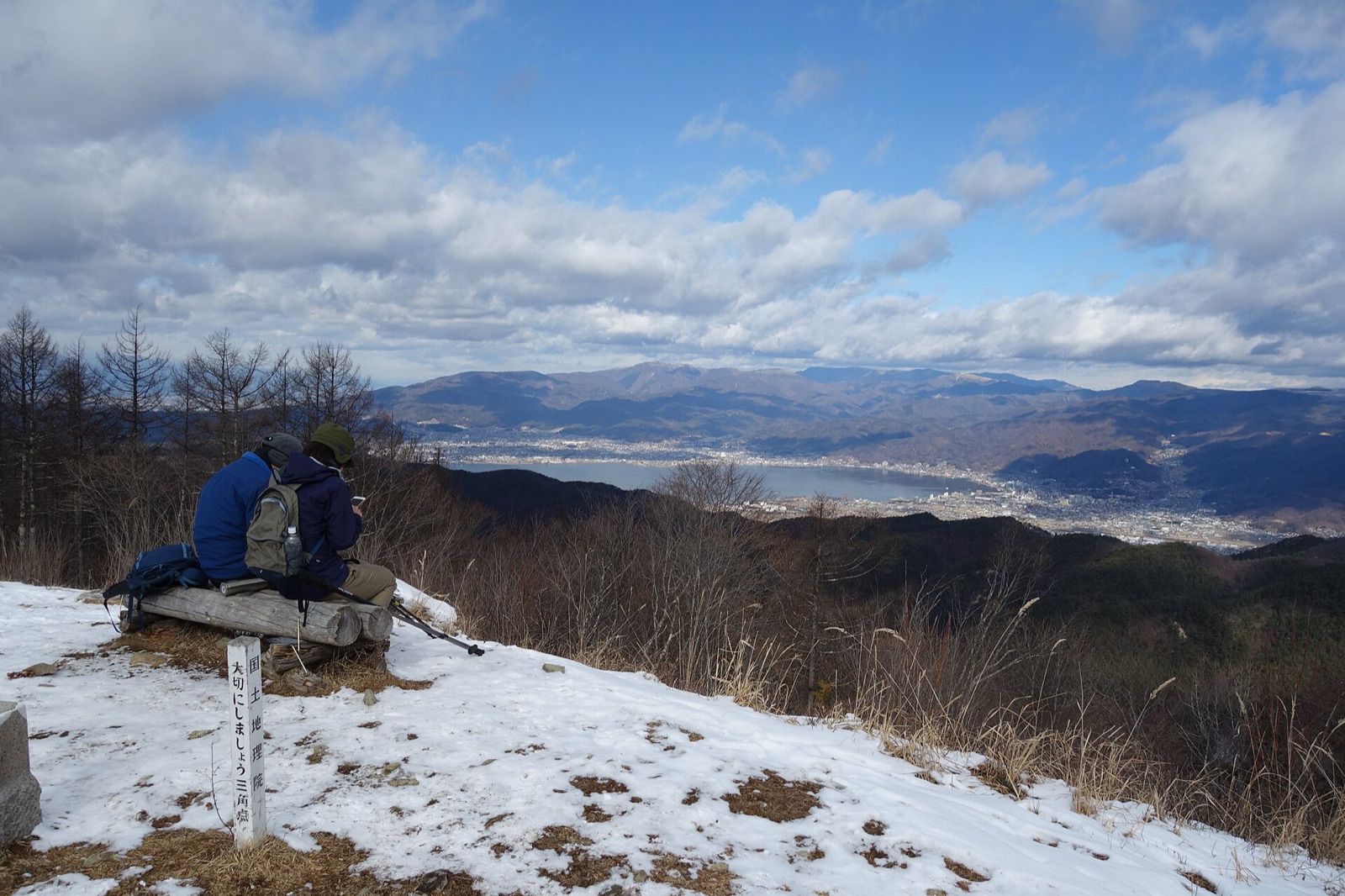
| Around | Lake Suwa — in deep winters, the rare O-watari ice-crack crossing the frozen lake, read as the god's own footprints; Kirigamine highland; the museums of Suwa City |
Food to save room for: Shinshū miso (and miso soft-cream), nozawana pickles, gohei-mochi (rice, smashed flat, painted with miso and grilled — the standard pilgrimage ration), oyaki, and shinshū soba. Seasons: cherry blossoms with residual snow in spring, fireworks over the lake in summer, leaves plus onsen in autumn, and — if the cold is deep enough — the O-watari, faith written in ice across the whole lake.
Lore ↔ prototype
| Moriya Shrine (Gensokyo) | Suwa (reality) |
|---|---|
| Sanae Kochiya | The Moriya clan (Jinchōkan family); the 78th head, Sanae Moriya, is a real namesake |
| Sanae, a worshipped living god | Upper shrine's goshintai = the living Ōhōri, until Meiji; then Mount Moriya |
| Kanako Yasaka (wind & mountains) | Takeminakata (Suwa Daimyōjin): the victor from outside, god of war, wind and water; consort Yasakatome at Maemiya |
| Suwako Moriya (native god, frog) | Moreya: the defeated native, god of mountains; the Mishaguji (serpent/rock-seat) sphere |
| The "Suwa Great War" spell card | The local version of the ceding-of-the-land myth: Moreya vs Takeminakata |
| The whole shrine moved to Gensokyo | Upper shrine: Mount Moriya as the divine body; halls and pillars renewed every 7 years |
| Snake & frog hairpins | Kanako = serpent, Suwako = frog — worn openly in her hair |
| One-heir secret wind-and-rain rite | The Jinchōkan's hereditary rites, severed in Meiji |
| "Faith is for the transient people" | Suwa Taisha: head of ~25,000 Suwa shrines across Japan — once the greatest collector of faith |
SOURCES
SOURCES- Suwa Taisha official guide
- Suwa Taisha official history
- Wikipedia (JA): Suwa Taisha / Onbashira / Moreya / Moriya clan
- Jinchōkan Moriya Archives (Chino City)
- Suwa Tourism Federation
Photos from Wikimedia Commons under free licenses (CC0 / CC BY / CC BY-SA); authors and licenses are credited beneath each image.