Winds Begin / Pilgrimage to Suwa / ONBASHIRA
ONBASHIRA · 05/08
Onbashira
Every seven years, faith becomes the sound of falling timber
| Stage | What happens |
|---|---|
| Yamadashi (April) | Logs felled deep in the mountains, dragged out of the forest. Upper shrine first, lower a week later |
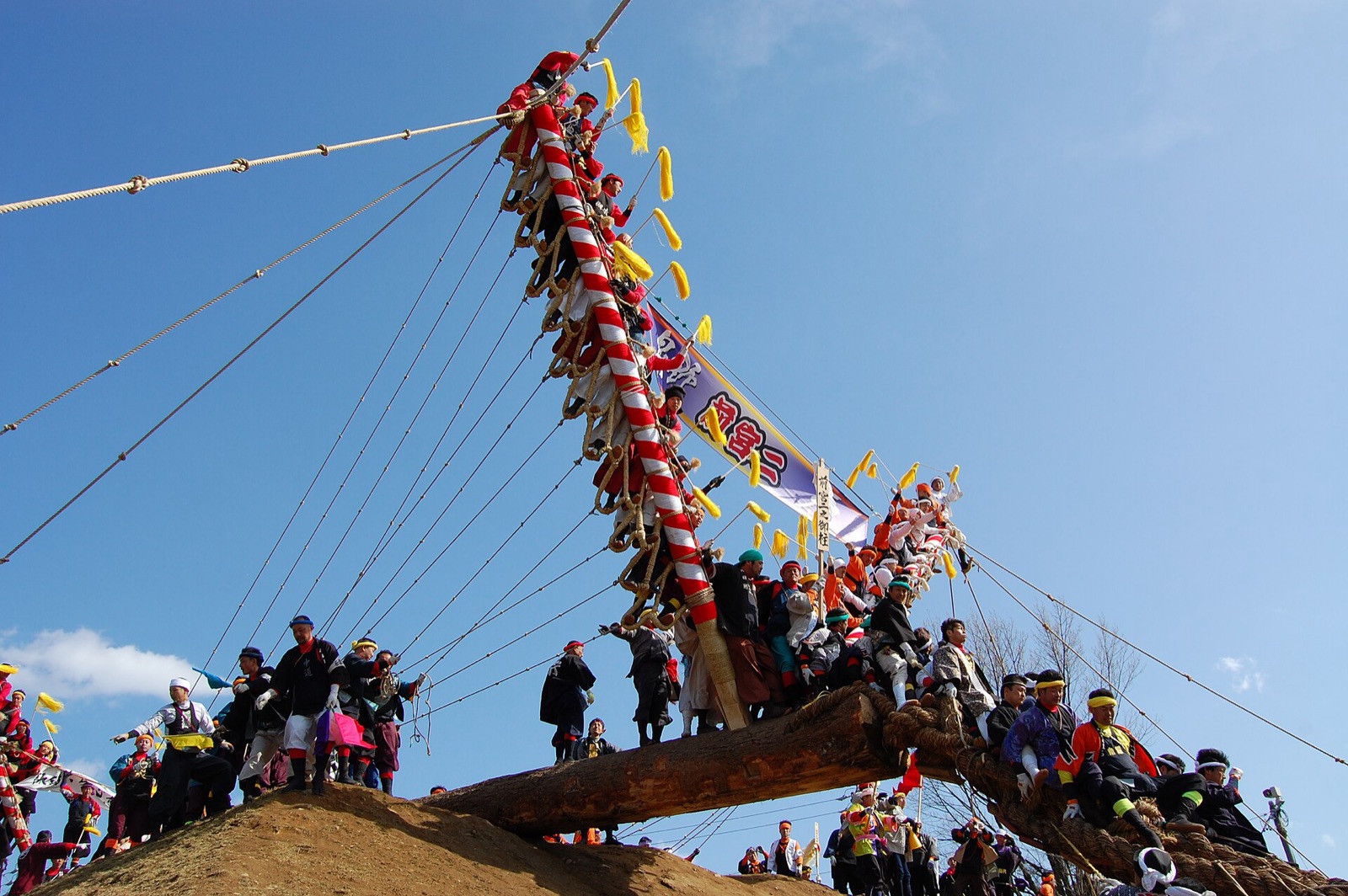
| Ki-otoshi | The highlight: the giant log slides down a ~35° slope with riders aboard — the festival's signature image, injuries most years |
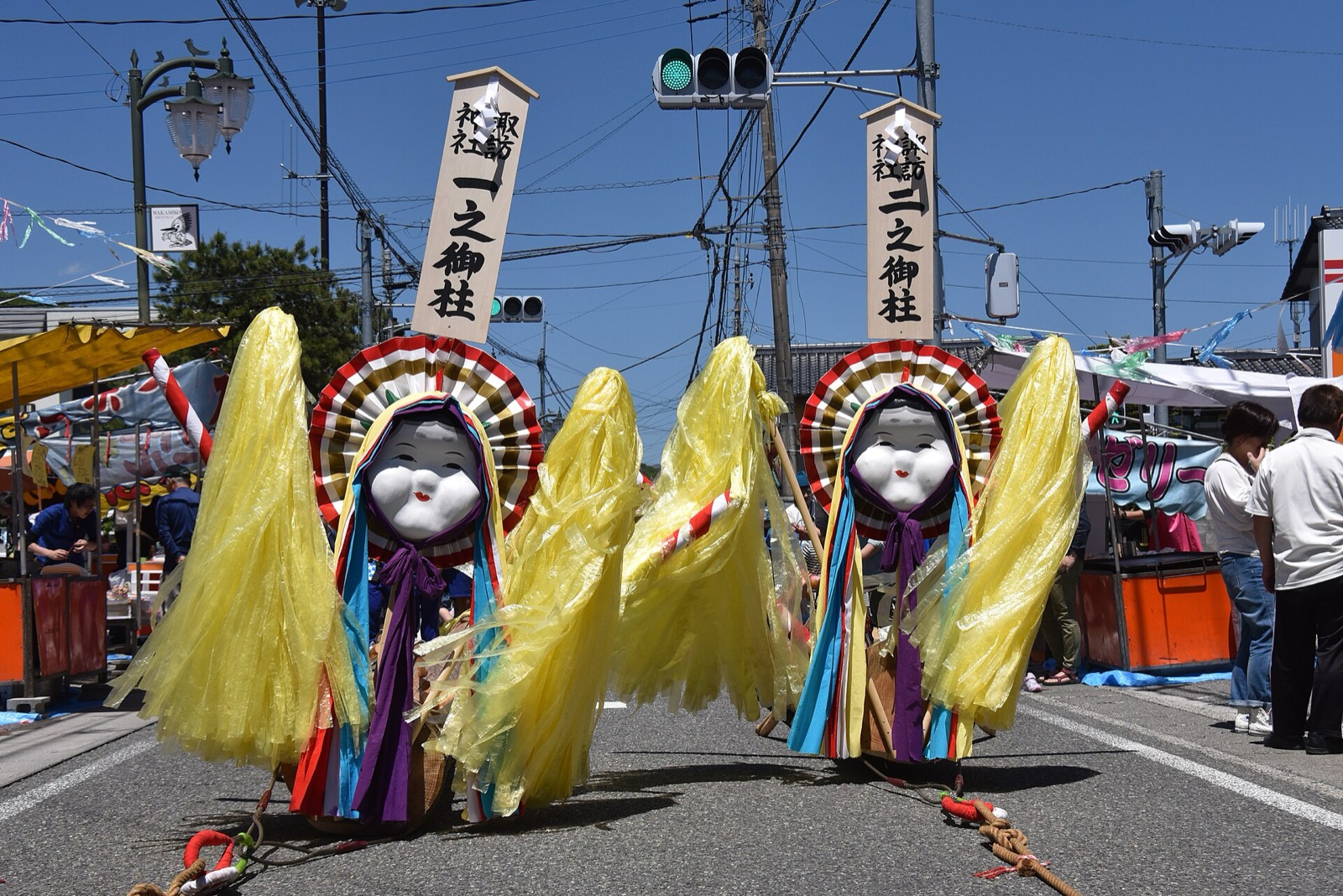
| Satobiki (May) | Logs hauled by neighborhood teams through town streets; households set up altars along the route |
| Kawagoshi | The lower shrines' specialty: hauling the multi-ton log across a cold river |
| Hōden tenseza (May–June) | The true core: the sacred palanquin moves into a newly built treasure hall. Upper shrine: mid-June |
Over 1,200 years old, formally the "Shikinen Zōei Onbashira Taisai." The pillars are Suwa faith's oldest form of boundary — look for the four dark pillars at each shrine's corners on any visit. The split of labor is itself Suwa-style: parishioners haul the logs; the priesthood performs the hall rites. In Sanae's terms: Onbashira is faith made physical — no machinery, just shoulders and conviction, moving a mountain into the shrine. Next festival: 2028 (Year of the Monkey). Book lodging six months ahead.
SOURCES
SOURCESPhotos from Wikimedia Commons under CC licenses; credits beneath each image.